Well, the pond expansion is done. It's hard to know how much expansion is enough, but we were able to make the area much wider and deeper. The very lowest part now has some water pooling in it, which demonstrates just how low our water table really is! Water will continue to collect in the pond from rain, snow, and groundwater, so hopefully by next year we’ll have enough water for the fields and hoophouses.
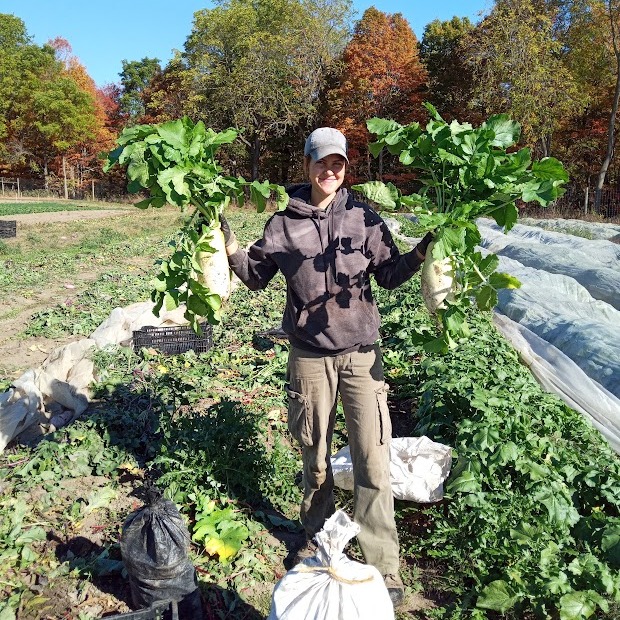
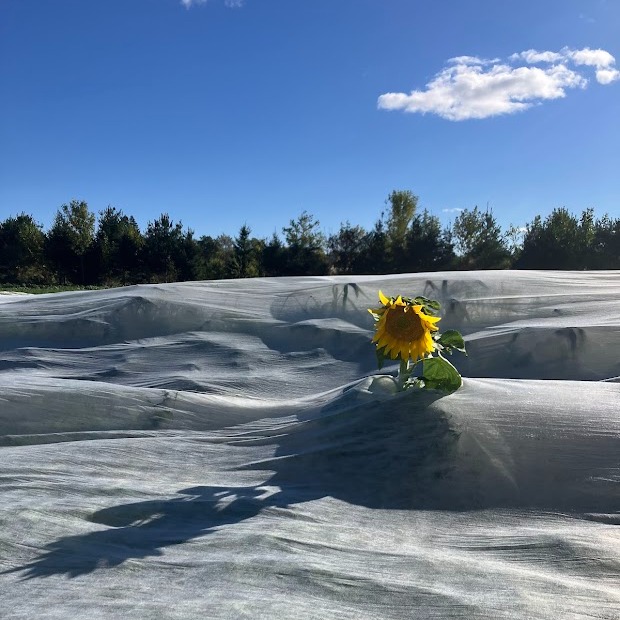
A big project starting today is the winter radish harvest. According to our crop plan this year, this includes purple, red, and white daikon, watermelon radish, and black Spanish radish. These are all grown using the same method: direct-seeded in 3-row beds, watered for germination, covered with insect netting, and weeded 2–3 times using our tractor-mounted cultivator (about a week apart for each cultivation). Once they reach a minimum size, we begin harvesting just what we need for the week.
We’ve delayed this storage harvest for a few weeks now, even though the radishes have been sized up for a while. If you’ve had these winter-type radishes before, you know they can be spicy in the summer. The magic happens during cold fall days, where the inner flesh transforms, becoming crunchy and sweet while the heat stays in the skin. Some folks like the flavour of the skin, but we recommend peeling if you are new to these radishes.
High temperatures through late summer and fall, meant our winter radishes grew very quickly and were sized up long before it cooled off. It’s not just the flavor and texture that improve with the cold—how well these radishes store is also affected. Yes, they become tastier, but as a key winter storage crop, it’s important that we wait to ensure they’ll last well. Now that we’ve had a few cold nights and two light frosts, we’re finally ready to harvest!
We’re in the field today, twisting off the greens from every radish and putting them into pallet bins and reused feed bags from back when we had chickens on the farm. Then they’ll go to our coolers and be kept as close to 0°C as possible without freezing. Long after a hard frost, we’ll continue harvesting what we need each week—just from the cooler instead of from the field.
So this year, if you see a particularly large winter radish in your order or at our market stand, and your friend says, “That radish is huge! It must be woody inside,” you can confidently tell them:
“Radishes don’t get woody just because they’re large—it’s just more radish to love (and easier to peel). These are extra large this year because of those extra warm fall days we enjoyed.”